Attic Insulation What It Really Costs: What Hesperia Homeowners Pay in 2026
In Hesperia, attic insulation costs between $1,800 and $6,400 for a typical 1,200 to 1,800 square foot attic in 2026. The wide range exists because material type, R-value spec, and labor access vary dramatically from house to house. If you’d rather skip the math and get a precise number, call us at (866) 950-6425 for a free estimate.
Most of the cost guides you’ll find online quote around $1.50 per square foot. That figure assumes fiberglass blown to R-19, installed in an attic with easy walk-in access and no existing insulation to deal with. For Hesperia homes, that number is wrong on three counts: R-19 doesn’t meet Climate Zone 5 code minimums, many attics in this area require access work before anyone can even get inside, and the air-sealing that determines whether your insulation actually performs is almost never included in that headline price. Let’s break down what the real numbers look like.
2026 Material and Labor Costs for Hesperia Attics
Hesperia sits in California’s Climate Zone 5, which technically requires R-49 to R-60 at the ceiling for new construction under Title 24. Most existing homes fall somewhere below that, and bringing an older attic up to a reasonable performance level means aiming for R-38 minimum, with R-49 being the smarter target given our summer temperatures. Here’s what each material actually costs installed at those specs in 2026:
| Insulation Type | Target R-Value | Installed Cost per Sq Ft | Typical 1,500 Sq Ft Attic |
|---|---|---|---|
| Blown fiberglass | R-49 | $1.40 – $2.10 | $2,100 – $3,150 |
| Blown cellulose (GreenFiber) | R-49 | $1.55 – $2.35 | $2,325 – $3,525 |
| Open-cell spray foam | R-38 | $2.75 – $4.25 | $4,125 – $6,375 |
| Closed-cell spray foam | R-30+ | $4.50 – $7.00 | $6,750 – $10,500 |
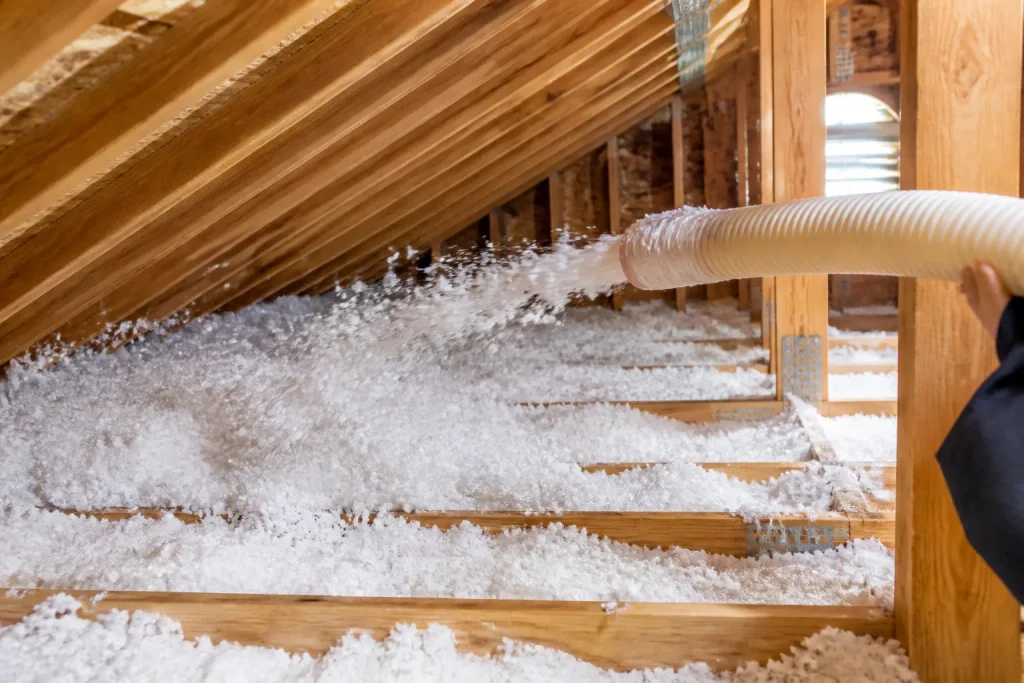
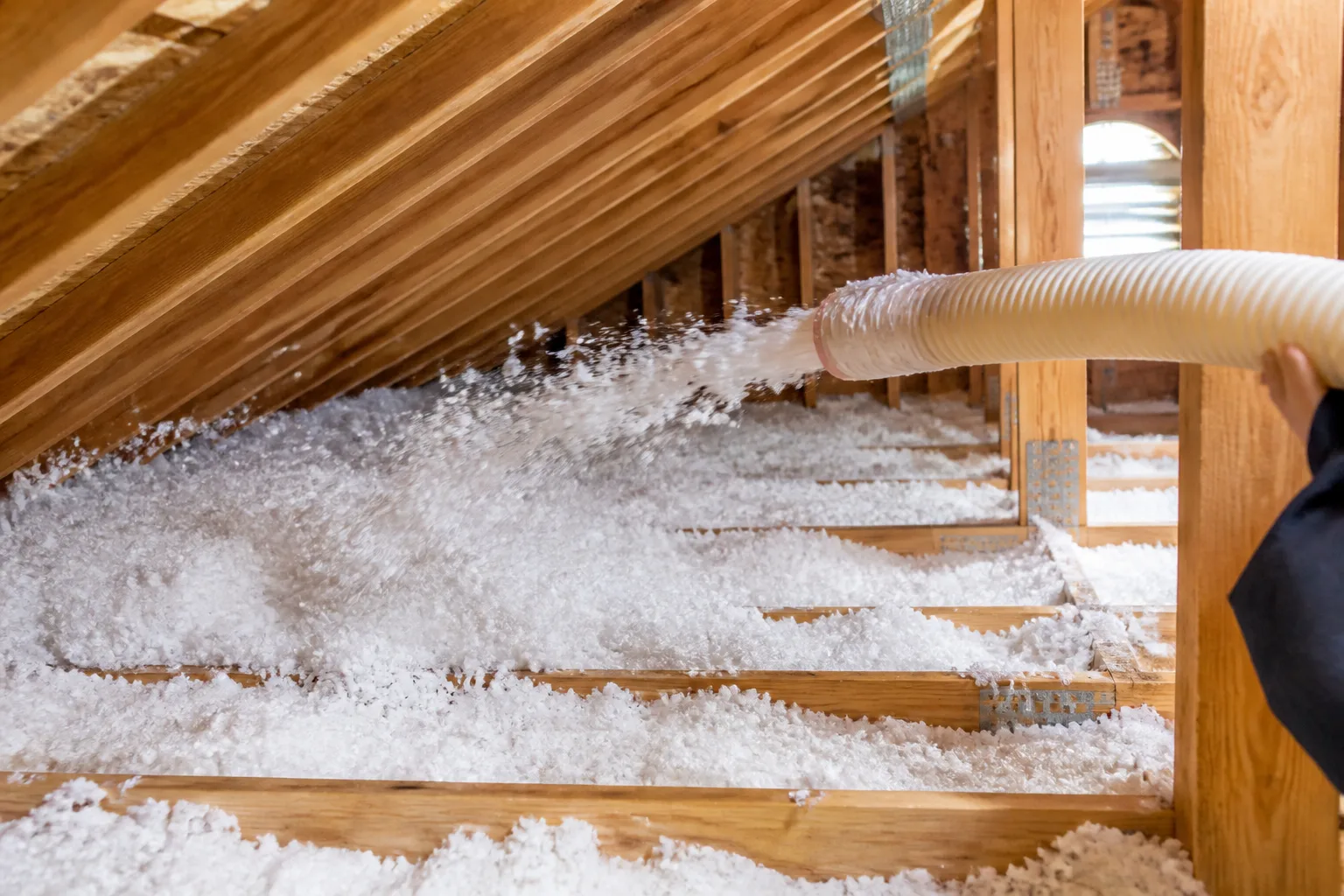
Those are installed numbers including labor, not just material. Blown fiberglass remains the most common choice for standard attics. We install Knauf and CertainTeed blown fiberglass because both deliver consistent density and settle less than bargain-basement brands. Cellulose from GreenFiber costs slightly more and performs better in high-wind attic conditions because it doesn’t loft as easily. Spray foam is a different animal entirely: you’re paying for air-sealing and insulation in one step. We work with Icynene for both open- and closed-cell applications, and it’s the right call for attics with ductwork running through unconditioned space or for rooms over garages where comfort has never been quite right.
For context on how those materials get matched to Hesperia attics, our Attic Insulation in Hesperia page covers the decision process more thoroughly.
The Hidden Line Items Most Quotes Skip
If you get three quotes and one comes in $900 lower than the others, the contractor didn’t find a magic material source. They left something out. In Hesperia specifically, these are the line items that cause surprise charges after work begins:
- Air-sealing labor: Before any insulation goes down, top plates, plumbing penetrations, can lights, chimney chases, and wiring holes need foam-sealing. This is tedious, hot, dirty work that can take a full day and add $400 to $900 to the job. Skip it and you’ve installed a thick blanket full of holes.
- Access widening: Many Hesperia homes built in the 1980s and 1990s have attic hatches in hallway closets that are 22 inches wide or smaller. A crew can’t get equipment through, and a technician can’t reach the far eaves. Widening a hatch or adding a gable-end access can add $250 to $600.
- Old insulation removal: Rodent-contaminated insulation, water-damaged batts, or old cellulose that’s compressed to half its rated R-value need to be vacuumed out first. Expect $1.50 to $2.50 per square foot just for removal and haul-off.
- San Bernardino County permit fees: Most attic insulation retrofits don’t require a permit, but if you’re also moving walls, adding a room, or doing structural work, the county building department will want to sign off. Budget $200 to $500 if a permit enters the picture.
A credible quote lists these as line items. A suspiciously cheap quote omits them and then “discovers” the problems after the crew has already started. We’ve walked into attics in the Mesa area where homeowners had been quoted a bargain price, only to find out the contractor intended to blow insulation directly over a rodent-infested space without saying a word.
How Your Attic’s Geometry Changes the Price
Square footage gets all the attention, but it’s not the number that drives labor cost. A 1,400 square foot attic with a 4:12 pitch, 2×8 joists, and an access hatch in the garage is an easy job. The same 1,400 square feet with an 8:12 pitch, 2×4 trusses, and knee walls in a room-over-garage addition is a completely different job. Here’s what actually moves the labor number in Hesperia:
- Pitch and peak height: At 4:12, a technician can walk the joists with reasonable care. At 8:12, work requires crawling boards, ropes, and significantly more time. Labor can add 30 to 50 percent on steeper roofs.
- Joist depth: 2×8 joists give you 7.25 inches of nominal depth before insulation covers the joist tops. That’s enough for about R-26 blown fiberglass without extra work. Getting to R-49 in that cavity means either adding a raised edge or switching to a material with higher R-value per inch, like closed-cell foam.
- Ductwork and mechanicals: If your furnace and ducts run through the attic, the crew has to work around them. That adds time, and time is labor. Spray foam often becomes the smarter play here, since it air-seals the duct system as it insulates.
This is where material-matching matters. We carry multiple brands and installation methods precisely because a 4:12 attic with deep joists should not get the same treatment as an 8:12 attic full of ductwork. When someone tells you there’s one right answer for every Hesperia attic, they’re telling you about the one product they sell.
Rebates and Tax Credits: What’s Actually Available in 2026
The federal 25C tax credit remains active in 2026, covering 30 percent of eligible insulation and air-sealing costs up to $1,200 per year. That’s a tax credit, not a deduction: it comes directly off what you owe the IRS. For a $3,000 attic insulation job, that’s $900 back if you meet the documentation requirements. The work has to meet Energy Star standards for your climate zone, and the home has to be your primary residence.
On the California side, utility programs shift quarterly. As of early 2026, homeowners in the Southern California Edison and SoCalGas service areas may qualify for attic insulation rebates in the $0.15 to $0.25 per square foot range through approved contractors. The total rarely exceeds $300 to $500 for a standard attic. The theoretical maximums you see on some websites ($1,500 or more combined) apply to whole-home efficiency packages with heat pumps and windows, not insulation alone.
Be honest with yourself about what these programs require: documented pre-insulation R-value, post-installation verification, and contractor certifications. It’s not free money with no paperwork. A reputable insulation contractor handles the documentation as part of the job. The guy who says “you can claim it yourself” is leaving you to figure out the fine print when the IRS or the utility comes asking.
How to Read a Quote Without Getting Burned
When you see a low bid for attic insulation in Hesperia, read the scope line by line. Here’s what a legitimate quote should show, and what the red flags look like:
- R-value specified to the inch: “R-49 blown fiberglass at 15 inches settled depth” is a real scope. “Adequate attic insulation” is not. If the quote doesn’t state the target R-value, the contractor gets to decide what “adequate” means after they’ve already been paid.
- Air-sealing as a distinct line item: If air-sealing isn’t mentioned at all, it’s not happening. And insulation without air-sealing in a Hesperia summer is like running the AC with a window open.
- Prep work listed: Access, removal, vent baffles, and any walkway boards over joists should appear as separate items. If they’re absent, you’ll see them as change orders.
- Brand and product name: “Fiberglass” is not a specification. “CertainTeed InsulSafe SP blown to R-49” is. We name brands in every quote because you should know exactly what you’re paying for.
We’d rather you get a good outcome from a competitor than a bad outcome from anyone. But if you want a quote where the line items are spelled out, the R-value is stated, and the air-sealing is included because it has to be, call Riverstone. Insulation is all we do, which means we don’t have a siding crew to keep busy and no reason to rush an attic job to get to a bathroom remodel.
Hesperia’s climate punishes under-insulated attics. A summer afternoon at 105 degrees puts a 160-degree attic directly over your ceiling. That heat doesn’t politely stay up there. It radiates into your living space, forces your AC to run longer cycles, and shortens the life of the equipment. The cost conversation should always start with what problem you’re actually solving. If you just want Blown In Insulation in Hesperia to top off a handful of thin spots, that’s a $1,200 to $2,000 job. If you want the attic sealed and insulated to the point where your upstairs rooms finally hold a consistent temperature, Spray Foam Insulation in Hesperia is a different investment that solves a different problem.
The Bottom Line
Attic insulation in Hesperia costs $1.40 to $7.00 per square foot installed in 2026, depending on material and spec. Most homes fall between $2,000 and $5,500 for a proper R-49 blown-in job with air-sealing included. The number moves based on attic access, roof pitch, joist depth, and whether old insulation needs removal. Federal tax credits can return up to $1,200, and utility rebates add a bit more. The cheapest quote will almost always be the most expensive outcome, because it’s omitting the work that makes insulation perform. If you’re in Hesperia and want a free estimate with real line items and honest R-value targets, call Riverstone Insulation at (866) 950-6425.
Frequently Asked Questions
For new construction, California Title 24 requires R-49 to R-60 in Climate Zone 5, which includes Hesperia. For an existing attic retrofit, R-38 is a practical minimum and R-49 is the smarter target. Anything below R-38 and you’ll feel the difference in both summer heat and winter chill. Call (866) 950-6425 and we’ll inspect your current insulation depth and give you a straight answer.
In Hesperia, it depends on your attic. If your ductwork runs through unconditioned attic space or you have a room that’s never comfortable regardless of thermostat setting, spray foam may be the only fix that works. You’re paying for air-sealing as part of the foam application. For a straightforward attic with no ducts and good access, blown fiberglass or cellulose gets you the same R-value for about half the cost.
Blown fiberglass and cellulose maintain rated R-value for 20 to 30 years if they stay dry and rodent-free. Spray foam lasts the life of the home when installed correctly. The bigger risk in Hesperia isn’t material breakdown, it’s wind-driven dust, rodent intrusion, and the gradual compression of the top layer in low-pitch attics. An inspection every 8 to 10 years is worth the time.
Yes, and the drop can be substantial. Attic heat gain is the single largest driver of summer cooling load in the high desert. Combined with air-sealing, a properly insulated attic typically reduces cooling costs by 15 to 30 percent depending on how bad the current condition is. The percentage sounds modest until you multiply it across July, August, and September in Hesperia.
Written by the team at Riverstone Insulation, serving Hesperia since 2013.
Need Insulation Help?
Call Riverstone Insulation — licensed & insured, here with fast after-hours help in Hesperia.
(866) 950-6425