Insulation Company in Spring Valley Lake, CA
Blown in insulation is the most common retrofit we install in Spring Valley Lake, and the reason comes down to how this community was built. Most homes around the lake went up between the 1970s and 1990s as weekend retreats, with R-11 or R-13 walls and thin attic batts never meant for full-time desert living. When owners convert those properties into year-round residences, loose-fill cellulose or fiberglass is often the only practical way to get real thermal performance into existing wall cavities and shallow attic spaces without tearing the house apart. Call Riverstone Insulation at (866) 950-6425 for a free assessment of what your Spring Valley Lake home actually needs.
Why Spring Valley Lake Homes Are Different
Spring Valley Lake sits at roughly 3,000 feet in the high desert, which means insulation here has to answer two opposite problems at once. Summer highs regularly push past 100°F, so under-insulated attics turn into heat radiators that force air conditioners to run almost continuously. Winter nights, on the other hand, routinely drop below freezing, and the same thin insulation that lets heat in during August lets it escape in January. A home that needs both aggressive cooling performance and freeze protection is a different animal from what a coastal contractor typically deals with, and material choice has to account for that swing.
The housing stock compounds the issue. This is a private, man-made lake community where nearly every home was built as a second home or retirement retreat between the 1970s and 1990s, often with minimal insulation meant for weekend use. Upgrading that under-insulated original stock for full-time occupancy is the defining insulation job here, and it’s a pattern you won’t find in neighboring Victorville or Hesperia to the same degree. Homes on the lake side frequently have vaulted ceilings with exposed beams and limited attic depth, which means standard attic batt jobs sometimes aren’t possible at all. In those cases we typically dense-pack cellulose from the exterior or use injection foam, and crews who only ever work flat-ceiling tract homes get surprised by how different the access points are around here. Riverstone Insulation has served Spring Valley Lake since 2013, and we’ve learned which parts of the community tend to need which approach.
Our Main Spring Valley Lake Services
Most Spring Valley Lake homeowners call us about two specific problems: attics that are bleeding conditioned air, and walls or ceiling cavities that need air-sealing plus thermal control in one pass. Here’s what each job looks like in this community.
Attic Insulation in Spring Valley Lake
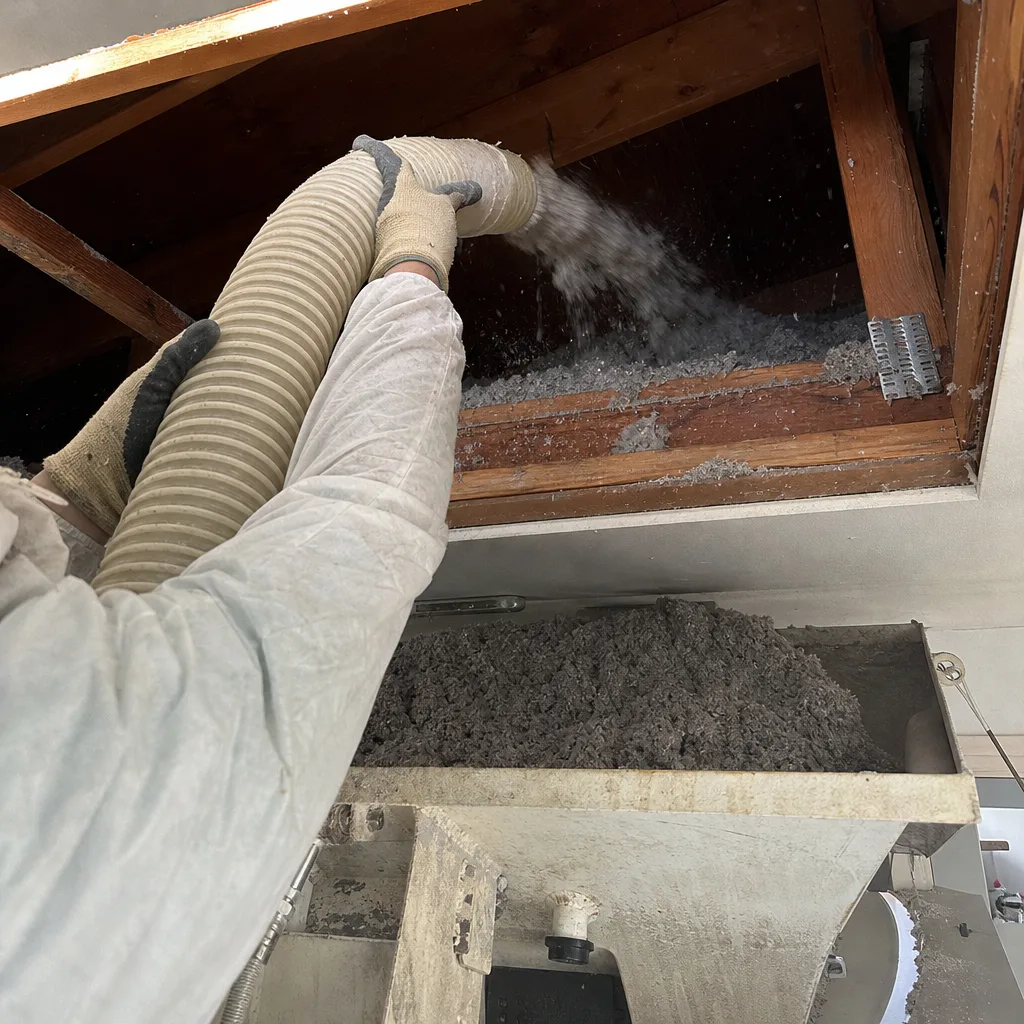
Attic work in Spring Valley Lake usually starts with an inspection that reveals exactly what we expect: aged fiberglass batts compressed to half their original R-value, or blown-in material that’s settled inches below the tops of the joists. Given the 100°F summer days and sub-freezing winter nights, upgrading the attic is the single highest-impact insulation move for most homes here, because heat moves through the ceiling plane more aggressively than anywhere else in the house. We assess venting, existing depth, and access before recommending either new blown-in coverage or batts depending on the structure. Learn more about how we approach this job on our Attic Insulation in Spring Valley Lake page.
Spray Foam Insulation in Spring Valley Lake
Spray foam earns its price tag in Spring Valley Lake when a home has vaulted ceilings, knee walls, or rim joists that conventional insulation can’t address properly. Because so many lake-side properties were built with exposed beams and limited attic depth, we often recommend closed-cell foam for those cavities: it air-seals and insulates in one application, and it performs consistently across the extreme temperature swings this climate produces. We install both Icynene and Demilec systems, and the choice between open-cell and closed-cell depends on the specific structure and moisture profile of the home. Read the full breakdown on our Spray Foam Insulation in Spring Valley Lake page.
What happens when you call
- 1
A real person answersNo phone trees — you reach a local pro.
- 2
You get an upfront price rangeHonest numbers before anyone is dispatched.
- 3
A background-checked tech heads outLicensed & insured, dispatched right away.
- 4
You approve before work beginsNothing starts until you say go.
Blown In Insulation in Spring Valley Lake
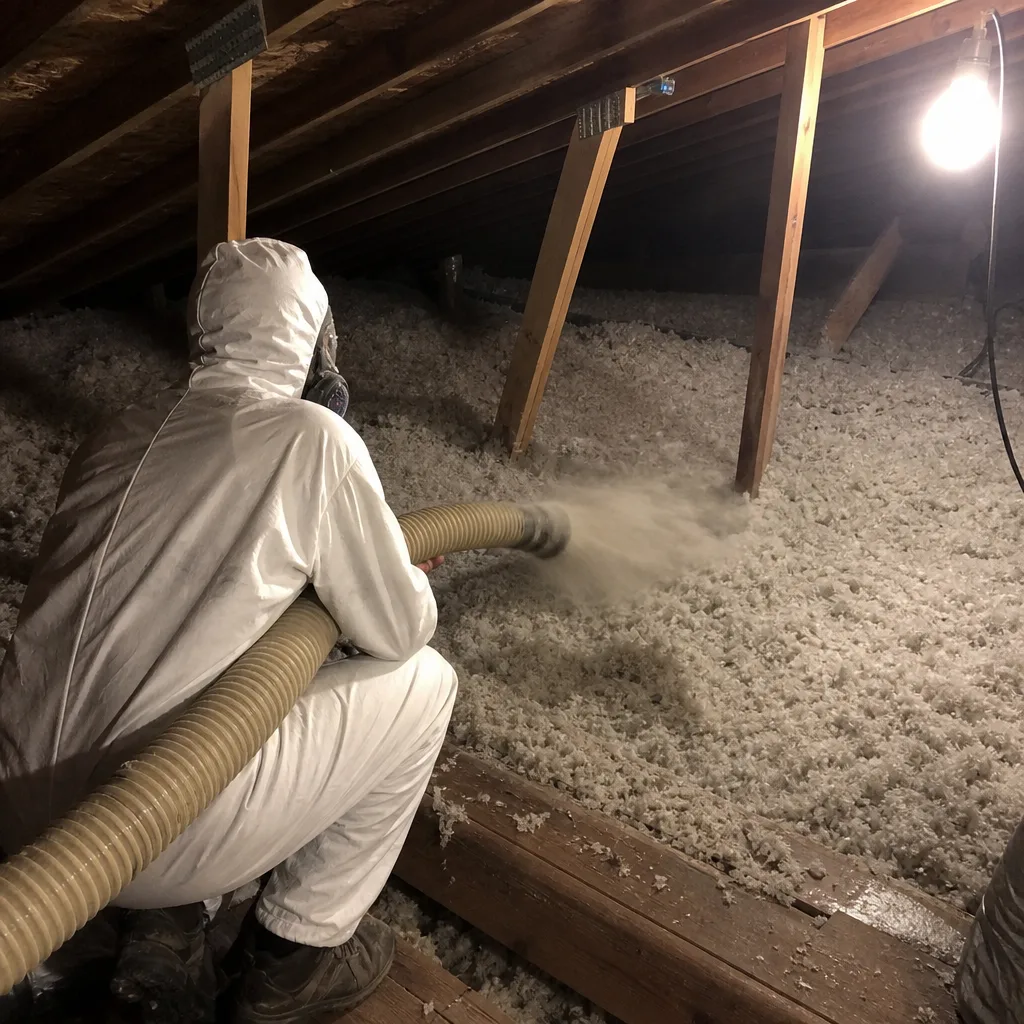
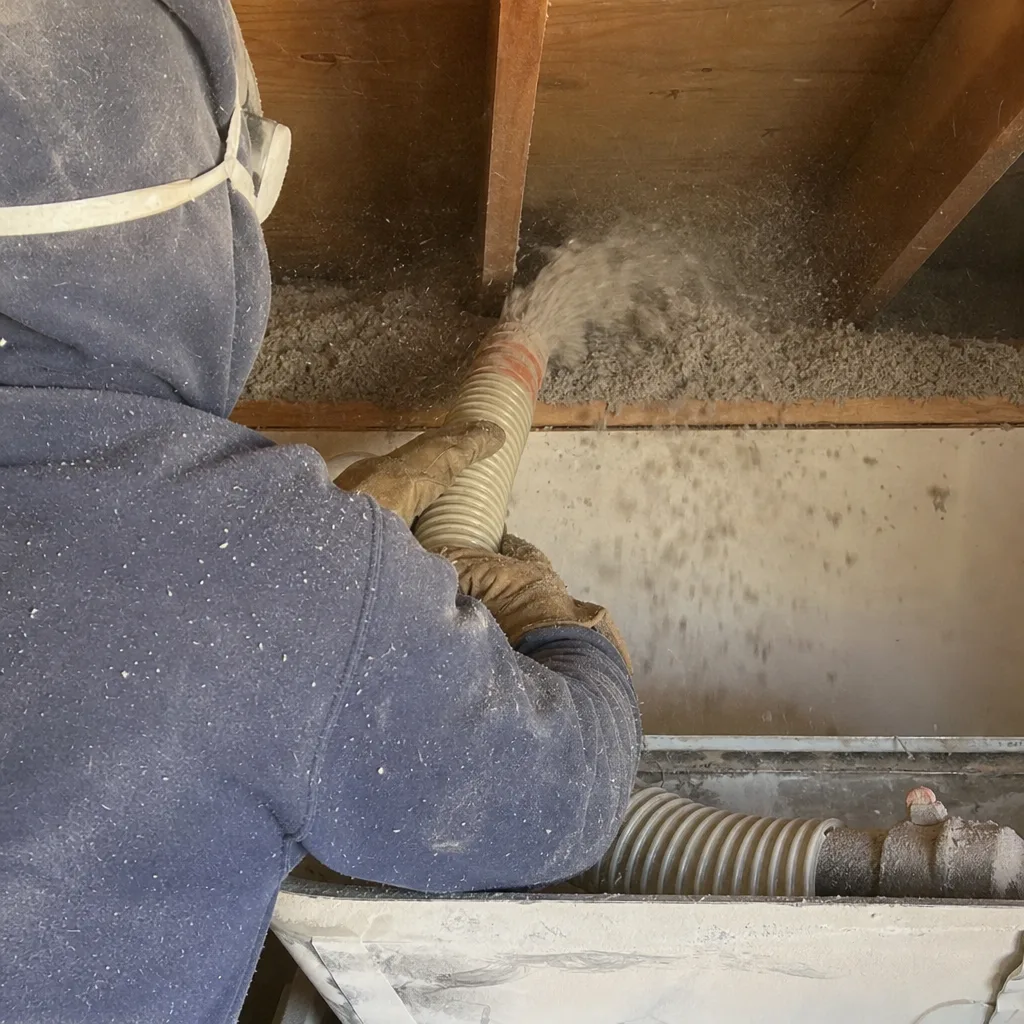
Blown in insulation is the workhorse retrofit for Spring Valley Lake’s housing era because it can reach places batts never could: the wall cavities of 1970s stucco ranch homes, the odd angles behind vaulted ceilings, the tight attic perimeters where a batt simply won’t lay flat. Loose-fill material, whether cellulose or fiberglass, gets installed through small access points and fills irregular spaces completely, which matters in a community where so many homes were framed never expecting serious insulation. With summer peaks above 100°F and winter nights below freezing, dense-pack or loose-fill coverage in the right places cuts both cooling bills and freeze risk in one move. We install GreenFiber cellulose and Johns Manville or CertainTeed fiberglass depending on the cavity and the homeowner’s priorities, and every job starts with a diagnostic look at where the home is actually losing conditioned air. See our full Blown In Insulation service details for how we approach material selection.
Cellulose Insulation
Signs you need it
You can feel drafts near baseboards or see energy bills that spike every summer and winter even though your thermostat stays set.
What it costs in Spring Valley Lake
Blown in insulation in Spring Valley Lake typically runs $1.50 to $3.50 per square foot installed, with dense-pack cellulose on the upper end of that range.
How we do it
We drill small access holes in each wall cavity or use existing attic access, then blow GreenFiber cellulose at the correct density for the space and seal everything back cleanly.
Blown In Attic Insulation
Signs you need it
Your attic has less than 10 inches of existing material, or the insulation that’s there looks compressed, settled, or patchy in places.
What it costs in Spring Valley Lake
Attic-only blown in coverage in Spring Valley Lake typically runs $1,000 to $3,500 depending on square footage and target R-value.
How we do it
We air-seal penetrations like plumbing stacks and light fixtures first, then blow loose-fill fiberglass or cellulose to a consistent depth across the entire attic floor.
Blown In Cellulose Insulation
Signs you need it
Rooms above the garage or at the far end of the house stay noticeably colder in winter or hotter in summer than the rest of the home.
What it costs in Spring Valley Lake
Blown in cellulose in Spring Valley Lake typically costs between $1.50 and $3.50 per square foot installed, with whole-home dense-pack jobs landing in the higher part of that bracket.
How we do it
GreenFiber cellulose goes in at a density that resists settling and closes off small air gaps, which is why we prefer it for irregular cavities and older framing.
Loose Fill Insulation
Signs you need it
You’re adding insulation to an attic with uneven joist spacing or lots of cross-bracing where batts leave gaps no matter how carefully they’re cut.
What it costs in Spring Valley Lake
Loose fill insulation in Spring Valley Lake runs $1,000 to $3,500 for a typical attic depending on the depth and the material chosen.
How we do it
We use a calibrated blowing machine to distribute material evenly, checking depth with gauges as we go so you get the actual R-value you paid for.
What Blown In Insulation Costs in Spring Valley Lake
| Item | Typical range in Spring Valley Lake |
|---|---|
| Attic-only blown in insulation | $1,000 – $3,500 |
| Whole-home dense-pack cellulose | $2,500 – $8,000 |
| Blown in insulation per square foot | $1.50 – $3.50 |
Is blown in insulation worth it for a Spring Valley Lake home?
For most homes built here between the 1970s and 1990s, yes. The original R-11 or R-13 wall insulation and thin attic batts were never designed for year-round occupancy, and blown in material is the most practical way to upgrade those cavities without a gut renovation. Call (866) 950-6425 for an exact scope and price.
How long does blown in insulation take to install in Spring Valley Lake?
Most attic jobs in Spring Valley Lake finish in a single day, and whole-home dense-pack work typically takes two to three days depending on access and the number of wall cavities. We’ll give you a clear timeline during the estimate. Call (866) 950-6425 to schedule a walkthrough.
Brands We Service in Spring Valley Lake
We install and service insulation from eight manufacturers, and for Spring Valley Lake work we lean on Rockwool for fire-resistance and sound-dampening, CertainTeed fiberglass for budget-conscious attic upgrades, and Icynene or Demilec spray foam for vaulted ceilings and air-sealing. Parts and materials are stocked for quick turnaround on the most common Spring Valley Lake job types. See our brands for the full list.
Pricing for Insulation Company in Spring Valley Lake, CA
| Service | Typical range in Spring Valley Lake |
|---|---|
| Attic insulation (full upgrade) | $1,500 – $4,500 |
| Blown in attic insulation | $1,000 – $3,500 |
| Dense-pack cellulose walls | $1.50 – $3.50 per sq ft |
| Loose fill insulation | $1,000 – $3,500 |
| Spray foam (closed-cell) | $2.00 – $4.50 per sq ft |
| Spray foam (open-cell) | $1.00 – $2.50 per sq ft |
| Mineral wool batts | $1.50 – $3.00 per sq ft |
| Fiberglass batts | $0.80 – $2.00 per sq ft |
| Air sealing (attic floor) | $400 – $1,200 |
| Vaulted ceiling dense-pack | $2,000 – $5,000 |
Prices in Spring Valley Lake run higher than the High Desert average when the job involves lake-side vaulted ceilings, limited attic access, or the need for injection foam rather than standard blown-in coverage. You’ll get an upfront, line-item price before any work begins, and that number doesn’t move unless the scope changes in writing.
Neighborhoods We Serve in Spring Valley Lake
Riverstone Insulation covers the full 92395 zip code, including every street on both sides of the lake, the golf course perimeter, and the surrounding residential loops built from the 1970s through the 1990s. We don’t treat the lake-side properties and the outer tracts the same way; access, roof pitch, and attic geometry change street by street, and so does the right insulation approach.
- Lake-front properties with vaulted ceilings
- Golf course perimeter homes
- Inner-loop single-family ranches
- Outer tract Spanish-style stuccos
- The 92395 corridor, including Bear Valley Road frontage
Our typical response for estimates in Spring Valley Lake is within one business day, and most jobs can be scheduled within the week.
Service Area – Cities Near Spring Valley Lake
Riverstone Insulation serves Spring Valley Lake and the surrounding High Desert communities, including Victorville, CA, Hesperia, CA, Apple Valley, CA, and Mountain View Acres, CA. If you’re in one of those areas and dealing with the same under-insulated housing stock we see around the lake, the same team and the same material-matched approach applies.
Serving Spring Valley Lake, CA — Our Local Coverage Area
We’re based in the Spring Valley Lake area and know this community well. Use the map below to see our service coverage — if you’re nearby, we can almost certainly help.
FAQs About Insulation Company in Spring Valley Lake
Spring Valley Lake is a private community with an HOA, and exterior-facing changes like new wall access holes or visible foam applications may need association sign-off before we start. Interior attic and blown-in wall work from the inside typically doesn’t. We’ll help you figure out which category your job falls into during the estimate, and we’re used to working with the local association’s process.
Most estimate requests in the 92395 zip code get a response within one business day, and we can usually start work within a week of your approval. Larger jobs, like whole-home dense-pack or full spray foam applications, may need a longer scheduling window depending on material lead times. Call (866) 950-6425 to check current availability.
The majority of homes around the lake were built as second homes or retirement retreats between the 1970s and 1990s with insulation suited for occasional weekend use. When owners convert them to full-time residences, the original R-11 or R-13 walls and thin attic batts can’t handle 100°F summers and below-freezing winters efficiently. The upgrade need is structural, not a sign of neglect.
Ready to get your Spring Valley Lake home properly insulated? Call Riverstone Insulation at (866) 950-6425 for a free estimate and a straight answer on what your house actually needs.
What happens when you call
- 1A real person answersNo phone trees — talk to a local insulation pro.
- 2You get an upfront price rangeHonest numbers before anyone is dispatched. No surprises.
- 3A background-checked tech heads outLicensed & insured, typically within 1-hour.
- 4You approve before work beginsNothing starts until you say go.
What Spring Valley Lake Customers Say
"Attic was at maybe R-11 from the 1970s and blown in over the top would have just buried the problem. They removed the old material, air sealed the top plates and penetrations first, then blew in to R-49. The upstairs is a completely different house in August."
— Jason Norris"Work is good and the house is noticeably more comfortable. There was insulation debris left in the hall closet under the attic access that I had to clean up."
— Miguel Salazar"Plastic laid from the front door to the attic hatch and they vacuumed the hallway afterward."
— Todd Ziegler