Fast, Reliable Attic Insulation Across Fontana
Attic insulation in Fontana costs $1.60 – $3.80 per square foot for blown-in fiberglass or cellulose, while a full attic insulation replacement in a typical 1,500 – 2,200 sq ft Fontana tract home runs $2,400 – $6,500 depending on material and air-sealing scope. Spray foam runs higher, usually $3.50 – $7.00 per square foot, because it seals and insulates in one pass. Most jobs in Fontana take one day with a two-person crew. Call (866) 950-6425 for a free estimate with real numbers, not ballpark ranges you’ll have to negotiate later.
We spend a lot of time in Fontana attics. Homes off Sierra Avenue, up in the 92336 subdivisions near Foothill and Cherry, through the older 92335 tract streets south of Foothill, and out toward the 92337 developments east of Alder. The houses change from block to block, but the problem is usually the same: attics that were never sealed against the wind that comes howling through the Cajon Pass. That’s the job half the time. Not just adding insulation. Closing the gaps that let Fontana’s dust and heat pour in.
Why Riverstone Insulation Is Fontana’s Preferred Attic Insulation Company
Nate Dillard runs our crews, and he’s the kind of person who’ll look at a dusty attic vent and tell you exactly where the air gap is before he quotes you a dollar figure. That’s the Riverstone way. We’re Attic Insulation specialists. That’s all we do. No general contracting, no remodels on the side, no roofer who “also does insulation.” Every estimate starts with a diagnosis, not a product pitch.
Fontana homeowners call us because we carry eight brands and install three methods, which means the recommendation you get is based on your attic, not our inventory — from Reflectix service in Fontana to full insulation systems. We stock Owens Corning, Johns Manville, Knauf, CertainTeed, Rockwool, Icynene, Demilec, and GreenFiber. If your home needs mineral wool for fire resistance near the eaves, we install Rockwool. If you need closed-cell foam to stop wind-driven dust penetration at the roofline, we install Demilec. The material choice follows the structure. Always.
We’ve worked in every Fontana ZIP code we cover – 92335, 92336, 92337, and 92331. The older single-story stucco homes south of Foothill Boulevard have different needs than the 2000s two-story subdivisions north of Baseline. Knowing the difference matters. It’s why our estimates for Fontana homes are specific, not a copy-paste from a template.
Radiant Barrier in Fontana
Radiant barrier in Fontana is one of the highest-impact upgrades you can make to a vented attic, because the summer sun bakes your roof deck all afternoon and that heat radiates straight down into whatever insulation sits below it. Our Fontana customers see indoor ceiling temperatures drop by 10 – 15°F in upstairs rooms after a radiant barrier install. The material cost is modest compared to the cooling savings in a place that routinely hits 100°F from June through September.
A radiant barrier installation involves stapling a reflective foil product to the underside of the roof rafters, creating a surface that bounces radiant heat back out instead of letting it soak into the attic air. In Fontana specifically, we recommend pairing a radiant barrier with dust-protected venting, because the same Cajon Pass wind that bakes the roof also blows fine dust through standard ridge and eave vents. A barrier without vent protection just becomes a dust-catcher over time.
Radiant Barrier with Blown-In Insulation
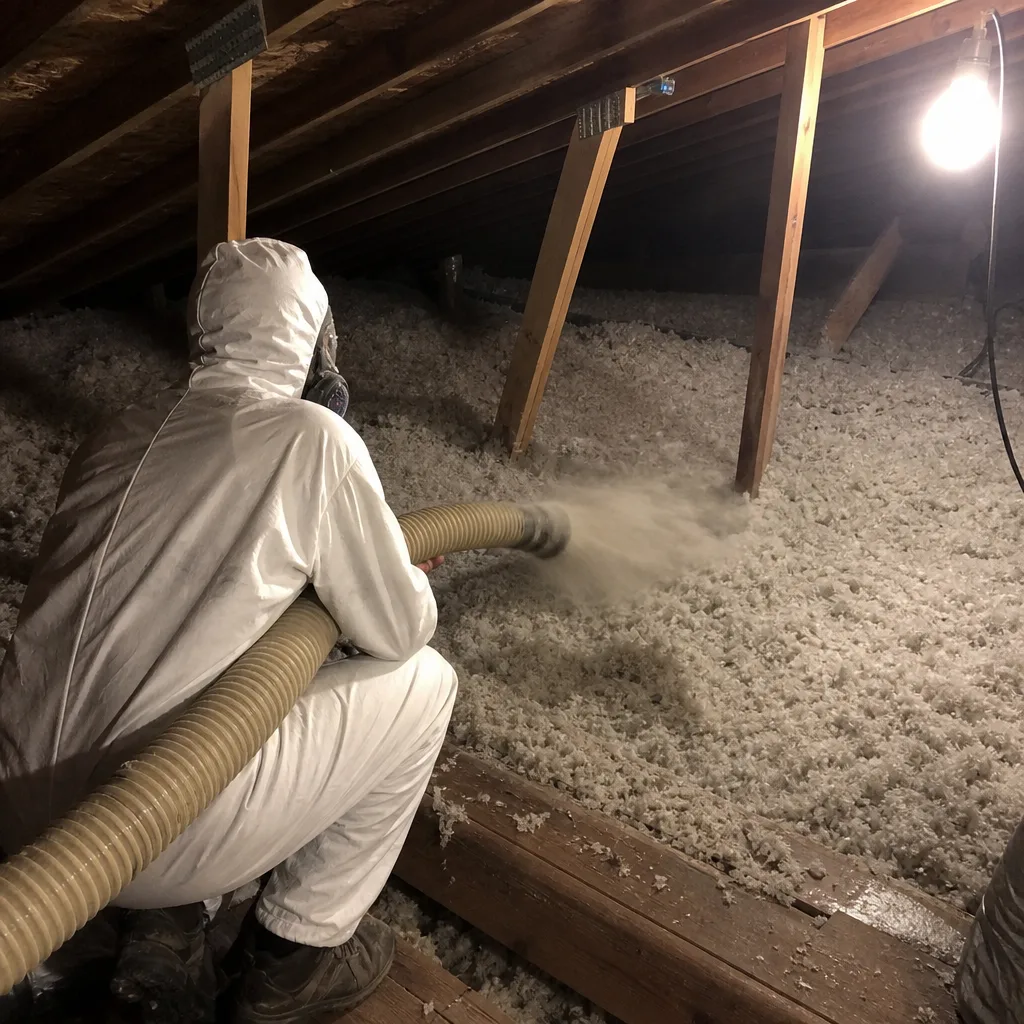
Most Fontana attics benefit from a combined approach: blown-in insulation on the attic floor plus a radiant barrier above. The floor insulation resists conductive heat rising from the ceiling, while the radiant barrier blocks the overwhelming radiant component from the roof deck. Together they address the two heat paths that make Fontana summers so expensive.
When a Radiant Barrier Makes Sense in Fontana
If your attic already has 12 – 18 inches of loose insulation but your second story still bakes, the problem isn’t insulation depth. It’s radiant heat. That’s when a barrier is the fix. Homes in the 92336 subdivisions built after 1995 with dark shingles are prime candidates, especially those with vaulted ceilings or bonus rooms over the garage.
Attic Cleaning Services in Fontana
Attic cleaning services in Fontana go beyond pulling out old insulation. What we’re really doing here is removing the dust, debris, and soiled fiberglass that the Cajon Pass winds push into the attic every time the Santa Anas kick up. In an older Fontana tract home, you’ll see it as gray-brown streaks near the eave vents and a fine powder covering the can-light housings. That dust is evidence of air movement, and it has to go before any new insulation goes in.
In Fontana, attic cleaning usually runs $800 – $2,200 for a typical 1,200 – 1,800 sq ft attic, depending on access, depth of removal, and whether rodent remediation is needed. Full insulation removal plus air sealing and re-insulation in a larger 92336 or 92337 home typically falls between $3,500 and $7,500. The cleaning phase itself is straightforward with the right equipment: commercial vacuum extraction, either through a bagged system or a truck-mounted unit run through the attic hatch.
Dust and Debris Removal Before Insulation Work
Any Fontana insulation replacement should start with removal and cleaning. Blowing new insulation over decades of wind-deposited dust, old batts, and maybe rodent droppings is the kind of shortcut that lowers the real R-value of the material and leaves the smell. We vacuum first, then air seal, then insulate. That’s the order.
Post-Cleaning Air Sealing
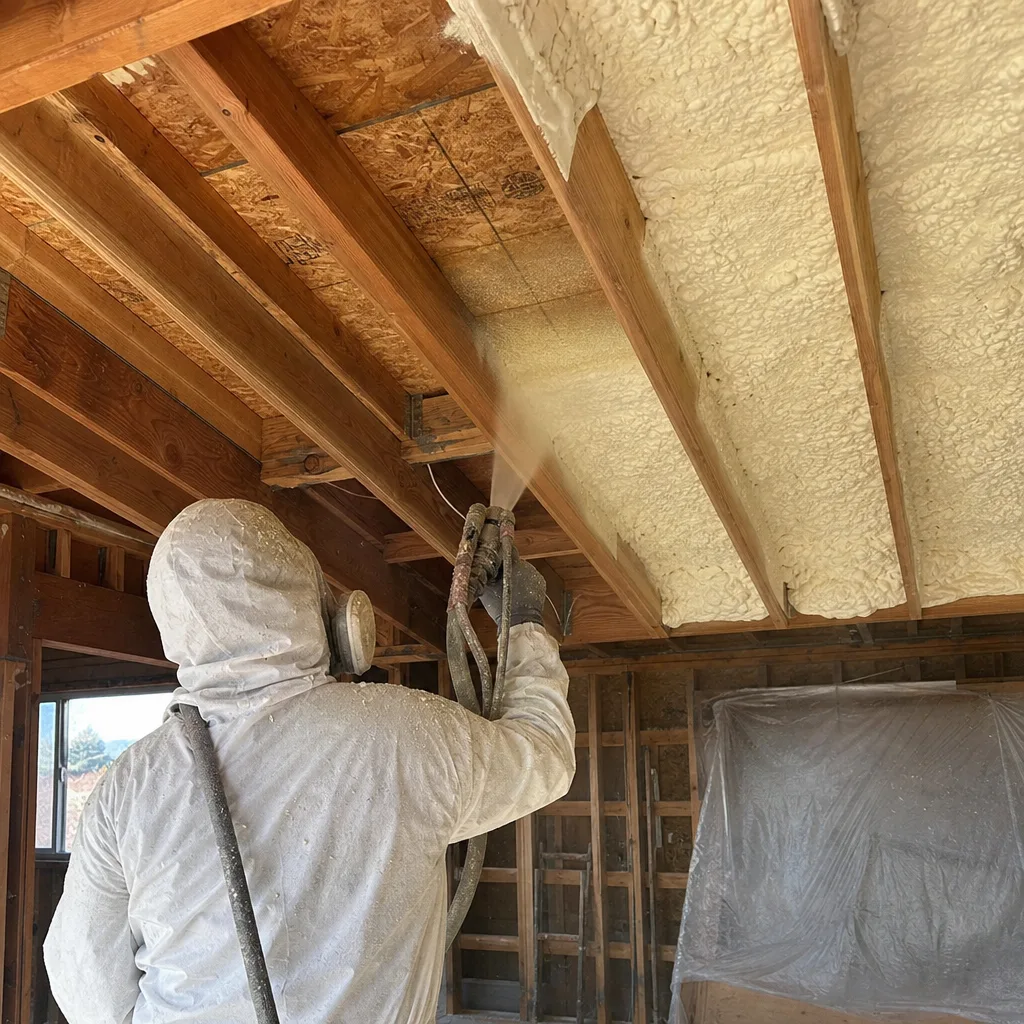
After we clean an attic, we seal the openings that let dust in: top plates, wire penetrations, plumbing vents, can-light housings, and attic hatch frames. Foam or caulk for the small stuff, board or foam blocks for can lights depending on the fixture rating. Skipping this step means the dust comes back and the new insulation gets soiled again within a couple of summers.
What happens when you call
- 1
A real person answersNo phone trees — you reach a local pro.
- 2
You get an upfront price rangeHonest numbers before anyone is dispatched.
- 3
A background-checked tech heads outLicensed & insured, dispatched right away.
- 4
You approve before work beginsNothing starts until you say go.
Trusted Brands We Service in Fontana
We install and service Attic Insulation systems built around what your home actually needs, and that means stocking real material options for Fontana customers. Owens Corning fiberglass for standard retrofits. CertainTeed batts for wall cavities and knee walls. Rockwool mineral wool for homeowners who want added fire resistance and sound dampening. Icynene and Demilec spray foam for air-sealing-critical jobs like the wind-exposed attics south of the 210. We keep common Foamular and Thermax components available for quick turns, and every estimate is written to your attic’s specific conditions, not a brand we’re incentivized to push.
Common Attic Insulation Problems We See in Fontana Homes
- Builder-grade batts in 1990s – 2000s tract homes that sag and gap. The original R-19 or R-30 fiberglass batts installed in thousands of Fontana homes were never rated for attic performance after 20 years of wind, dust, and thermal cycling. They drift out of place at top plates, leaving air channels that pump 100°F+ attic heat straight into the house.
- Dust-clogged vents from Cajon Pass winds. Fine silt gets blown through eave and gable vents continuously during spring and fall wind events. It settles on top of the insulation, compresses it, and reduces its R-value by half or more. We find this in nearly every older 92335 and 92337 home we inspect.
- Unsealed recessed can lights and top plates. The 1970s – 1980s stucco ranches south of Foothill almost always have dozens of can lights with no airtight boxes and open top plates at every interior wall. Those openings let conditioned air escape into the attic and give dust a clear path in. Sealing them is often worth more than adding a foot of new insulation.
- Missing or damaged attic ventilation. Fontana attics need moving air, but wind-driven rain and dust make standard box vents a liability if not baffled and screened. We also find plenty of ridge vents that were cut but never connected properly, leaving openings that do nothing but let wind whistling through the attic.
Pricing for Attic Insulation in Fontana, CA
Blown-in fiberglass or cellulose in a typical Fontana 1,500 – 1,800 sq ft attic runs $1,800 – $3,600 installed. Blown-in plus air sealing pushes that to $2,800 – $5,000 depending on how many penetrations need work. Full insulation removal, cleaning, air sealing, and re-insulation in a 2,000 – 2,500 sq ft 92336 two-story home typically falls between $4,500 and $8,000. Spray foam in Fontana runs $3.50 – $7.00 per sq ft for open-cell and $5.00 – $9.00 for closed-cell, with most attic roofline jobs landing between $5,500 and $12,000. Radiant barrier installation runs $1,200 – $3,000 for a standard vented attic. Call (866) 950-6425 for a free, attic-specific estimate from Nate’s crew. We don’t quote over the phone without seeing the space. That’s how you avoid surprises.
We Also Serve Cities Near Fontana
Riverstone Insulation works throughout the western Inland Empire. If you’re in Attic Insulation in Fontana and the surrounding area, we also serve Bloomington, Rialto, Glen Avon, and Sunnyslope. Same crews, same material access, same direct pricing. Call (866) 950-6425 and we’ll get you on the schedule.
Serving Fontana, CA — Our Local Coverage Area
We’re based in the Fontana area and know this community well. Use the map below to see our service coverage — if you’re nearby, we can almost certainly help.
FAQs About Attic Insulation in Fontana
That dust staining is a sign your attic is breathing through every gap the original builder left open. The Cajon Pass winds push fine silt through eave vents, soffit gaps, and recessed can housings, and it settles where the air enters, always near the eaves. The insulation isn’t failing because it’s old; it’s failing because air is moving through it. The fix is cleaning plus air sealing, then new insulation. Call (866) 950-6425 and we’ll inspect your attic and tell you exactly where the air is getting in.
Most of the time, yes. The R-30 fiberglass batts installed in 1995 – 2005 Fontana tract homes were laid over open top plates, gathered dust for 20 years, and settled into a mess. If you can see gaps over interior walls, dark streaking, or compressed sections, the batts are doing a fraction of their original job. In a 1,800 sq ft home off Cherry Avenue, we typically quote between $3,800 and $6,500 for full removal, air sealing, and blown-in R-49. Get a free estimate at (866) 950-6425.
Yes, and it’s one of the most cost-effective upgrades for a Fontana attic with standard shingled roof. A radiant barrier reflects radiant heat from the roof deck back out instead of letting it radiate down onto your ceiling insulation. Homes in the 92336 and 92337 subdivisions with dark shingles see the biggest temperature drops, especially in bonus rooms and upstairs hallways. It’s $1,200 – $3,000 for a typical vented attic. Nate can inspect your roof slope and venting at no cost: (866) 950-6425.
Cleaning goes first. The dust and debris that settled in the 1970s – 1980s attics south of Foothill Boulevard has to be vacuumed out before we air seal and blow in new insulation. The process takes a half day for most single-story Fontana ranches. We use truck-mounted equipment right at the curb. Then we seal the can lights, top plates, and eave gaps, then insulate. The result is a clean, sealed attic that works. The whole job, including cleaning, typically runs $3,500 – $7,000 depending on size and how many penetrations need sealing.
Air sealing alone will cut your bills, usually 10 – 18% on cooling in a Fontana summer, but it’s not enough by itself. The attic still needs insulation depth to stop conductive heat. In a 1960s – 1980s stucco ranch, air sealing plus bringing the attic from R-11 to R-49 is the full solution. We’ll show you the before-and-after during the estimate. Free, no obligation. Call (866) 950-6425.
In the 92336 subdivision off Cherry Avenue, our crew pulled soggy, dust-tracked builder-grade batts from a 2004 home’s attic, sealed top plates and can-light penetrations with foam, then blew in Owens Corning R-49 and installed a radiant barrier. The homeowner reported the upstairs bonus room finally holding temperature during 105°F afternoons. That’s the kind of result we aim for on every Fontana job.
Written by Nate Dillard, Owner at Riverstone Insulation, serving Fontana and the surrounding Inland Empire.