
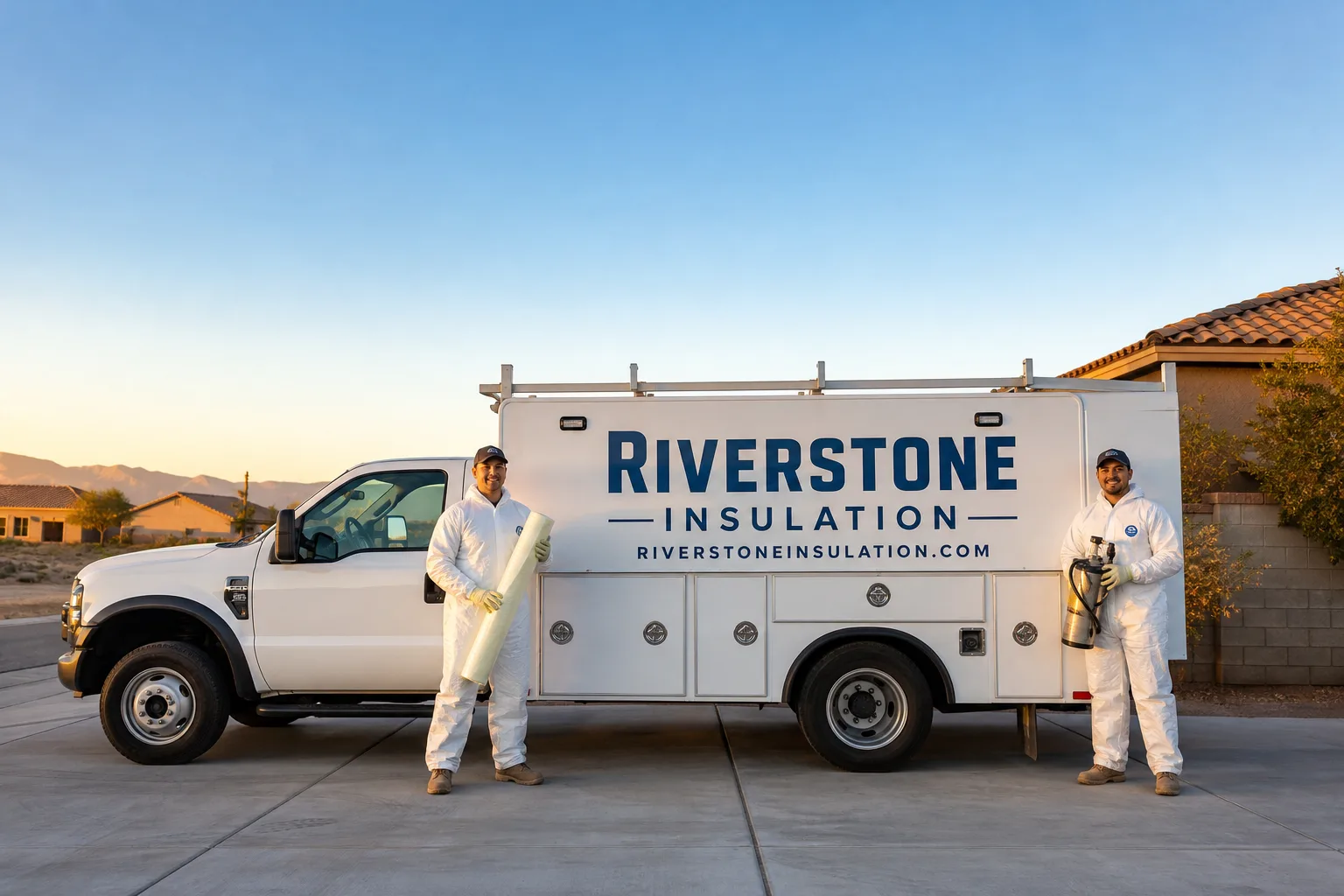
Fast, Reliable Attic Insulation Across Grand Terrace
Attic insulation in Grand Terrace is rarely a one-and-done job. Most homes here were built between 1960 and 1980, and the original insulation has spent fifty-plus summers baking at 140°F or more. What’s left is thin, settled, and often drifted to one side by canyon winds. We know exactly what that looks like because we’ve crawled through hundreds of Grand Terrace attics. If your upstairs rooms won’t hold temperature or your cooling bill climbs every August, call (866) 950-6425 and we’ll come out, inspect what’s actually up there, and give you an honest read on what needs correcting before anything gets added.
Key Takeaways:
- Grand Terrace attics often need correction work before top-up – especially on hillside streets where wind has shifted the old insulation.
- Typical attic insulation projects in Grand Terrace run $1,450 to $4,200 depending on attic size, access difficulty, and existing insulation condition.
- We carry eight insulation brands and match material to the actual attic, not to whatever’s on the truck.
- Nate Dillard leads every Grand Terrace estimate and walks the attic himself before recommending anything.
Why Riverstone Insulation Is Grand Terrace’s Preferred Attic Insulation Company
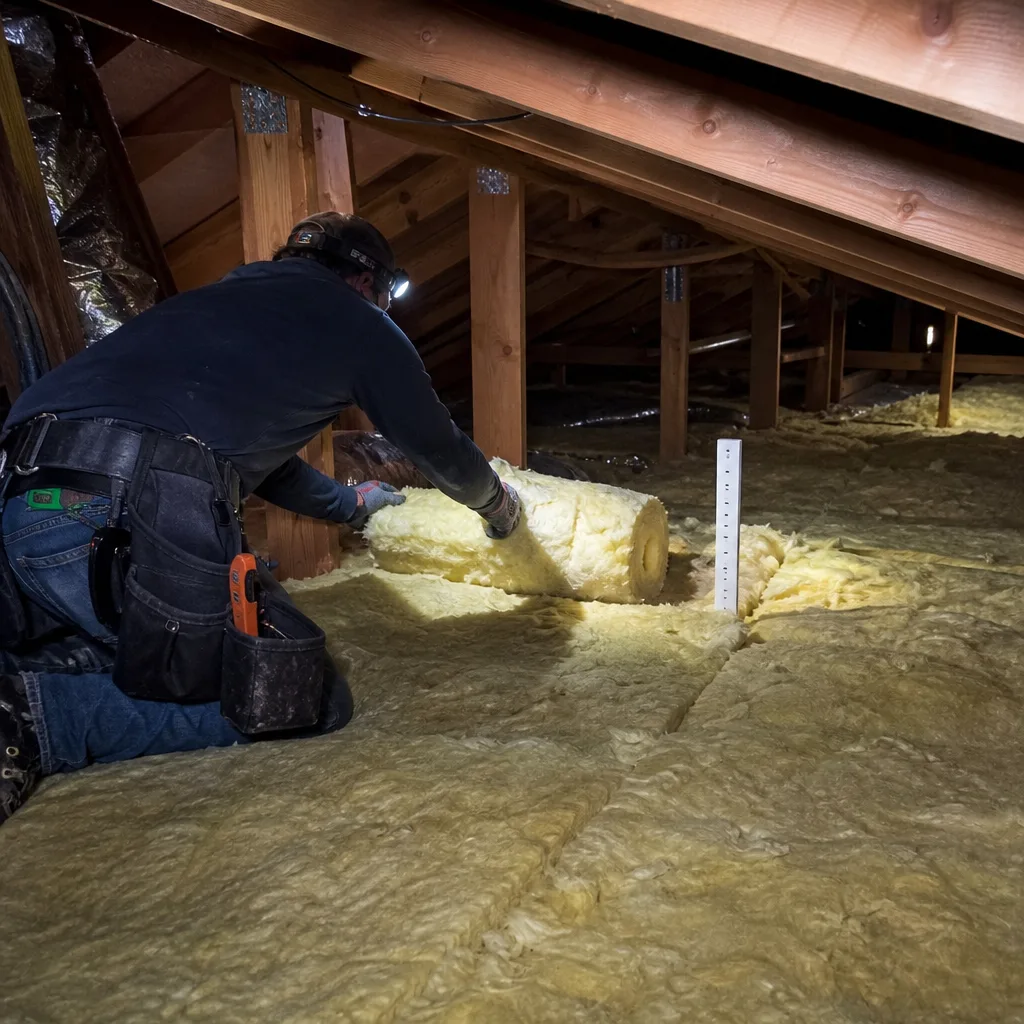
Grand Terrace is a particular market. It’s small, mostly built out, and tucked against the Blue Mountain foothills. That means most of what we do here is retrofit work on existing homes – not new construction. We’ve learned the quirks of these houses: the narrow attic hatches in the older tracts off Barton Road, the sun-baked stucco walls on the south-facing slopes, the canyon-edge lots where wind moves through attics differently than it does down in Colton or Loma Linda. Our Attic Insulation work in Grand Terrace isn’t a template job. Every estimate starts with a full attic walk-through, and we measure existing depth before quoting anything.
Nate Dillard, who leads our Grand Terrace work, has walked enough of these 1960s and 70s tract homes to know what’s behind the drywall before opening the hatch. That local familiarity means we show up prepared for steep rooflines, vaulted sections, and the kind of tight baffled cavities that make mid-century Grand Terrace homes harder to insulate correctly. We don’t sell a brand. We diagnose the attic, then pick the material that fixes the specific problem. That’s the whole job.
Grand Terrace homeowners tell us the same thing after the work’s done: the rooms that always ran hot or cold finally hold temperature. That’s the proof point we care about. We’re insulation-only by trade. No roofing side business, no general contracting. Every crew member spends their whole day solving attic problems, which is why we catch things other contractors miss.
Attic Cleaning Services in Grand Terrace
Attic Cleaning Services in Grand Terrace almost always start with the same discovery: the old insulation isn’t where it’s supposed to be. On hillside streets rising toward the Blue Mountains, canyon winds push blown fiberglass into the east eave over decades. The west half of the ceiling goes nearly bare. Dust, rodent droppings, and decades of dust-caked insulation sit piled against one side while the living space below roasts. A proper cleaning removes the old material, lets us inspect the top plates and wiring, and gives us a clean surface to air-seal before new insulation goes in. In Grand Terrace, expect to pay $800 to $1,600 for a full attic cleanout on a typical 1,200 to 1,800 square foot home, depending on access and how much material needs bagging and removal.
What a Grand Terrace Attic Cleanout Involves
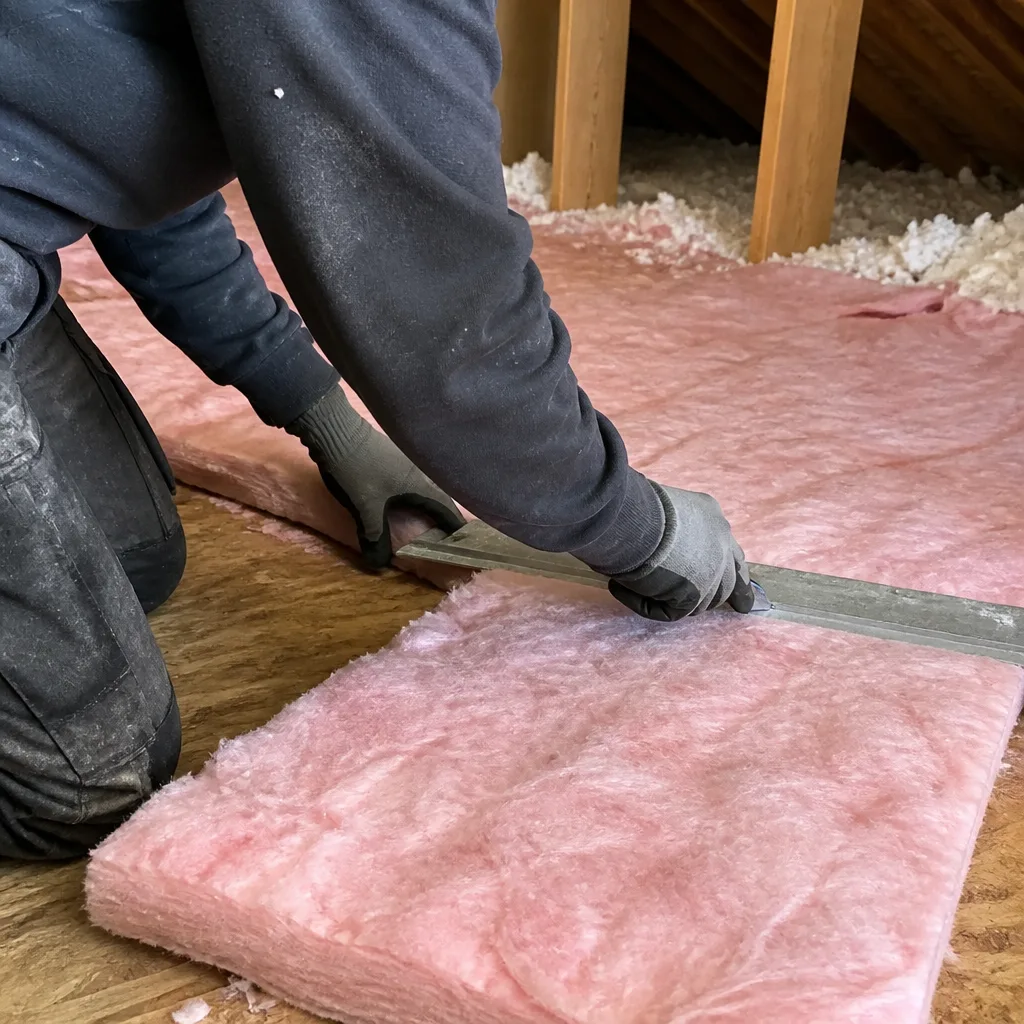
We vacuum out the existing insulation using commercial equipment, bag it, and haul it away. Then we inspect the framing, check for air leaks around can lights and top plates, and give you a straight answer on whether the decking is sound or whether the old insulation was hiding moisture issues. No scare tactics. Just what we see.
When Cleaning Comes Before Adding Insulation
If the existing material has been drifted by wind, heavily settled, or contaminated by pests, adding new insulation on top just buries the problem. On Grand Terrace hillside homes especially, we recommend cleaning first when more than half the attic shows uneven coverage. A clean deck means the new material performs the way it was designed to.
What happens when you call
- 1
A real person answersNo phone trees — you reach a local pro.
- 2
You get an upfront price rangeHonest numbers before anyone is dispatched.
- 3
A background-checked tech heads outLicensed & insured, dispatched right away.
- 4
You approve before work beginsNothing starts until you say go.
Attic Mold Removal in Grand Terrace
Attic Mold Removal in Grand Terrace is a service we perform more often than most homeowners expect, and the cause is almost always the same: warm interior air leaking into a poorly vented attic, condensing on the underside of the roof deck during Inland Empire winter nights. The Blue Mountain foothills drop temperatures fast after sundown, and those cold roof surfaces become condensation collectors. Mold follows. A typical Grand Terrace attic mold remediation runs $1,200 to $2,800, which includes treating the affected framing, addressing the moisture source, and often replacing compromised insulation.
Why Grand Terrace Attics Get Mold
The temperature swing is brutal here. Daytime attic heat pushes 140°F in summer. Winter nights near the foothills drop into the 30s. When warm, moist air from the living space leaks through unsealed top plates or recessed lights, it hits that cold roof deck and condenses. Over a few seasons, the framing starts showing mold growth, especially on north-facing slopes and under valley eaves where ventilation is weakest.
What We Do About It
We treat the mold at the surface level, but the real fix is stopping the air movement and improving ventilation. If the old insulation is contaminated, we remove it. If baffles are missing or blocked, we address that before anything new goes in. Mold treatment without fixing airflow just means a repeat job in two years. We’d rather do it once.
Trusted Brands We Service in Grand Terrace
We install products from eight manufacturers, and that’s not a marketing gimmick. It means when we walk a Grand Terrace attic, we actually choose. For the canyon-edge homes where wind drift keeps re-shifting loose-fill, we often recommend GreenFiber cellulose – it locks together and resists drifting better than loose fiberglass. For vaulted and partial-cathedral ceilings, Demilec closed-cell foam delivers high R-value in the limited cavity depth those 1960s rooflines leave us. And for straightforward flat-ceiling attics, an Owens Corning batt or blown-in system does the job at a sensible price. We stock what Grand Terrace homes need. No waiting on special orders when the weather turns.
Common Attic Insulation Problems We See in Grand Terrace Homes
- Wind-drifted blown insulation on hillside lots. Canyon wind finds its way into vented attics off Blue Mountain Drive and pushes loose-fill against the windward eaves. The floor-level view from the access hatch looks fine, but half the ceiling below is bare.
- R-7 original insulation that’s cooked. Many Grand Terrace tracts were built with minimal insulation by today’s standards. Decades of 140°F attic heat have collapsed and degraded what little was there. Even where coverage looks full, the R-value is a fraction of what it once was.
- Vaulted ceiling cavities that never got enough insulation. Mid-century Grand Terrace homes with cathedral or partial-cathedral ceilings have narrow rafter bays with tiny air channels. Standard floor top-ups never touch these spaces, so those rooms stay hot no matter how much insulation sits on the attic floor.
- Air leaks that undo the insulation’s work. Unsealed top plates, recessed lights, and attic hatches let conditioned air escape into the attic. In Grand Terrace’s hot summers, that’s like leaving a window cracked all day. Insulation slows conduction. It does nothing for air movement.
Pricing for Attic Insulation in Grand Terrace, CA
Here’s what you can expect to pay in Grand Terrace, based on the homes we walk regularly. A simple top-up of blown-in insulation to bring an accessible flat-ceiling attic up to R-38 runs $1,450 to $2,200 for a typical 1,200 to 1,800 square foot home. Full attic cleanout, air-sealing, and new blown-in insulation to R-49 runs $2,800 to $4,200. Insulating vaulted or cathedral ceiling cavities with closed-cell spray foam runs $3,500 to $6,500 depending on square footage of sloped ceiling. Attic mold treatment and ventilation correction adds $1,200 to $2,800 on top of insulation work. Every estimate is free, and Nate walks the attic himself before we quote. Call (866) 950-6425 to schedule.
We Also Serve Cities Near Grand Terrace
Riverstone Insulation works throughout the Inland Empire, and our Attic Insulation in Grand Terrace service area extends to the surrounding communities. We regularly handle attics in Highgrove, Colton, Loma Linda, and Rubidoux. Same attention to attic detail, same brands, same diagnostic-first approach – just a slightly longer drive for us, and we don’t charge extra for it.
Serving Grand Terrace, CA — Our Local Coverage Area
We’re based in the Grand Terrace area and know this community well. Use the map below to see our service coverage — if you’re nearby, we can almost certainly help.
FAQs About Attic Insulation in Grand Terrace
Canyon winds off the Blue Mountain foothills push loose-fill insulation toward one eave over time. We see this constantly on hillside streets around Grand Terrace, and the fix is to vacuum the drifted material, air-seal the attic floor, and re-blow a material that resists drift, like GreenFiber cellulose. Call (866) 950-6425 and we’ll come verify what’s actually happening in your attic; the estimate is free.
Yes, and in most cases it should be removed rather than topped up. R-7 insulation from the 1960s and 70s has degraded under decades of 140°F+ attic heat. Adding new insulation over deteriorated material does not restore the lost performance. We typically recommend a cleanout followed by fresh blown-in insulation to R-38 or R-49, which makes an immediate difference in summer cooling loads.
We use closed-cell spray foam, usually Demilec, injected or applied into the rafter cavities. The cavities in these Grand Terrace ceilings are too shallow for batt insulation at full depth, and the foam’s higher R-value per inch makes it the right fit. It also air-seals the roof deck, which matters when canyon winds press against the eaves.
The likely answer is in the attic. Original insulation in Grand Terrace’s mid-century homes has settled and degraded, and on hillside lots it has often drifted away from the living areas below. Heat rises straight through the ceiling and escapes. Correcting the attic insulation – including air-sealing the top plates – is the single most effective fix we perform on these homes, and it shows up as warmer rooms within a day of completion.
We do, and on Grand Terrace hillside lots it’s almost always the right call. Adding new insulation on top of wind-drifted or heat-degraded material just buries a problem we’ll be back to fix later. A full cleanout costs $800 to $1,600 on a typical Grand Terrace home, and it lets us inspect the attic floor, seal air leaks, and install new insulation on a clean surface. Call (866) 950-6425 for a walk-through and a straight answer on what your attic actually needs.
Written by Nate Dillard, Owner at Riverstone Insulation, serving Grand Terrace and the surrounding Inland Empire.