Insulation Company in Highgrove, CA
Blown in insulation is the most common call we get from Highgrove homeowners, and the reason is straightforward: most of the houses here were built between the 1950s and 1970s with thin original batt in the attic that has settled, compacted, or blown around over fifty-plus years of Inland Empire heat. When August temperatures in Highgrove push past 100°F and the attic radiates that heat down into the living space all night, the fix is usually dense, even coverage across the attic floor. Call us at (866) 950-6425 and we’ll assess what’s actually up there before recommending anything.
Why Highgrove Homes Are Different
Highgrove sits in a specific slice of the Inland Empire, and the housing stock reflects its mid-century development pattern. Most homes are single-story tract builds from the 1950s through the 1970s, sitting on slab foundations with low-pitch roofs. That low-slope roofline means attic space is tighter than you’d find in newer Highgrove-adjacent developments, and it changes how insulation gets installed. There’s less room to maneuver, which makes blown in insulation the practical choice over batts in many attics here because it flows into the cramped perimeter eaves that a batt simply cannot reach.
The climate is the other defining factor. Highgrove gets long stretches of summer days above 100°F, and nighttime temperatures don’t drop nearly enough to give the attic a chance to cool down. That’s a heat-gain problem, not just an outdoor comfort problem. Attics here can reach 140°F or more on a July afternoon, and all that stored heat presses down through whatever insulation exists. Thin or settled insulation barely slows it down, which is why Highgrove homeowners feel rooms heat up by 5 or 6 in the evening even with the AC running. Radiant barrier and attic ventilation upgrades matter more here than they do in neighborhoods with older masonry construction, where thermal mass behaves differently.
One more thing specific to Highgrove: after a Santa Ana wind event, attics in these low-slope homes often collect significant dust and debris intrusion through the soffit vents. Before any new insulation goes in, that debris has to be cleared. Leaving it in place creates two problems: it becomes a fire hazard when it accumulates around can lights or vent pipes, and it degrades indoor air quality as air moves through the attic into the home. We treat that cleanup as a standard part of the job in Highgrove, not an add-on.
Our Main Highgrove Services
While blown in insulation is our most-requested service in Highgrove, two other jobs come up often enough that they have their own dedicated pages: attic insulation as a full assessment-and-upgrade package, and spray foam insulation for homes with specific air-sealing or hard-to-reach cavity needs.
Attic Insulation in Highgrove
Attic insulation in Highgrove almost always starts with the same finding: the original mid-century batt has compressed to a fraction of its rated R-value, or it was never adequate for the Inland Empire’s heat in the first place. Our approach is to measure what’s there, check for the dust intrusion and vent blockages common to these low-slope roofs, and then build the attic up to a level that actually responds to Highgrove’s climate. For homes with especially tight attic access or irregular joist spacing, blown in material usually makes the most sense. For others, a combination of batt and blown in works better. The specifics are covered on the Attic Insulation in Highgrove page.
Spray Foam Insulation in Highgrove
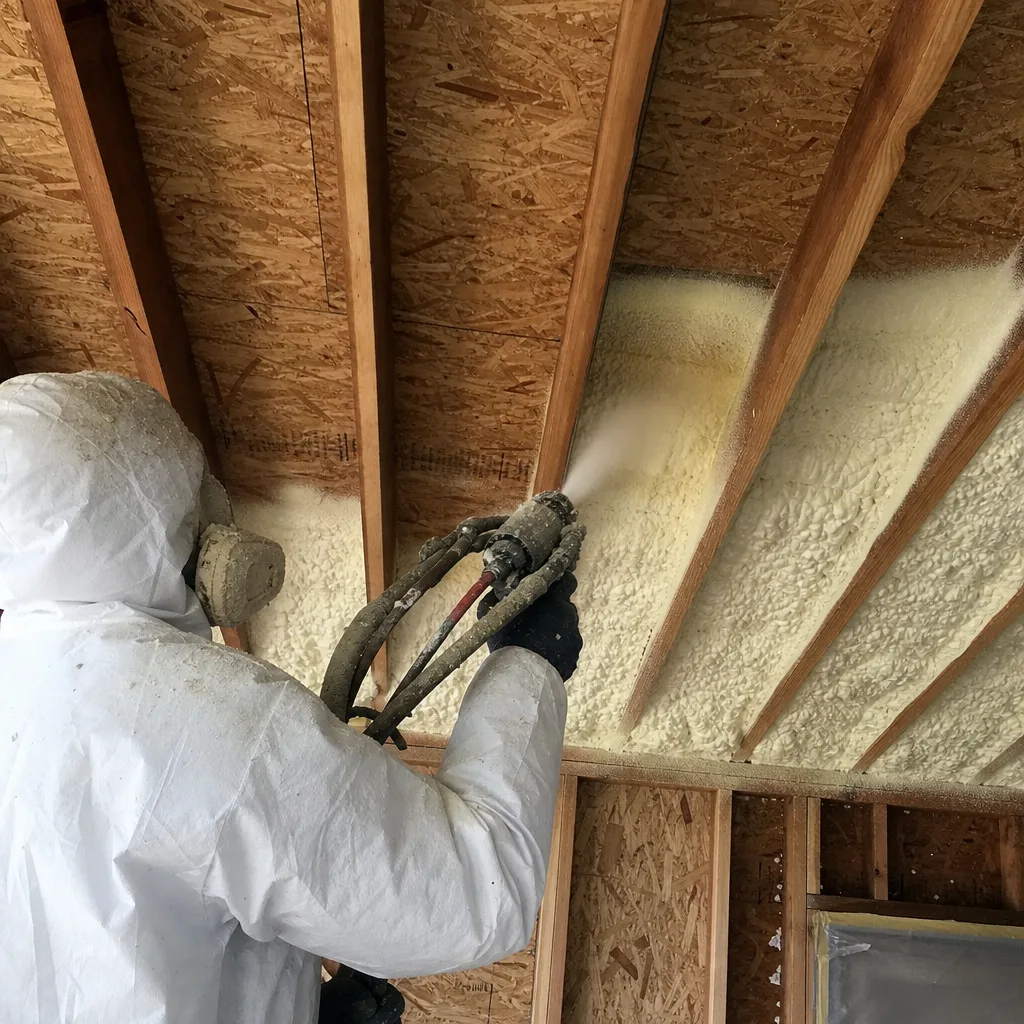
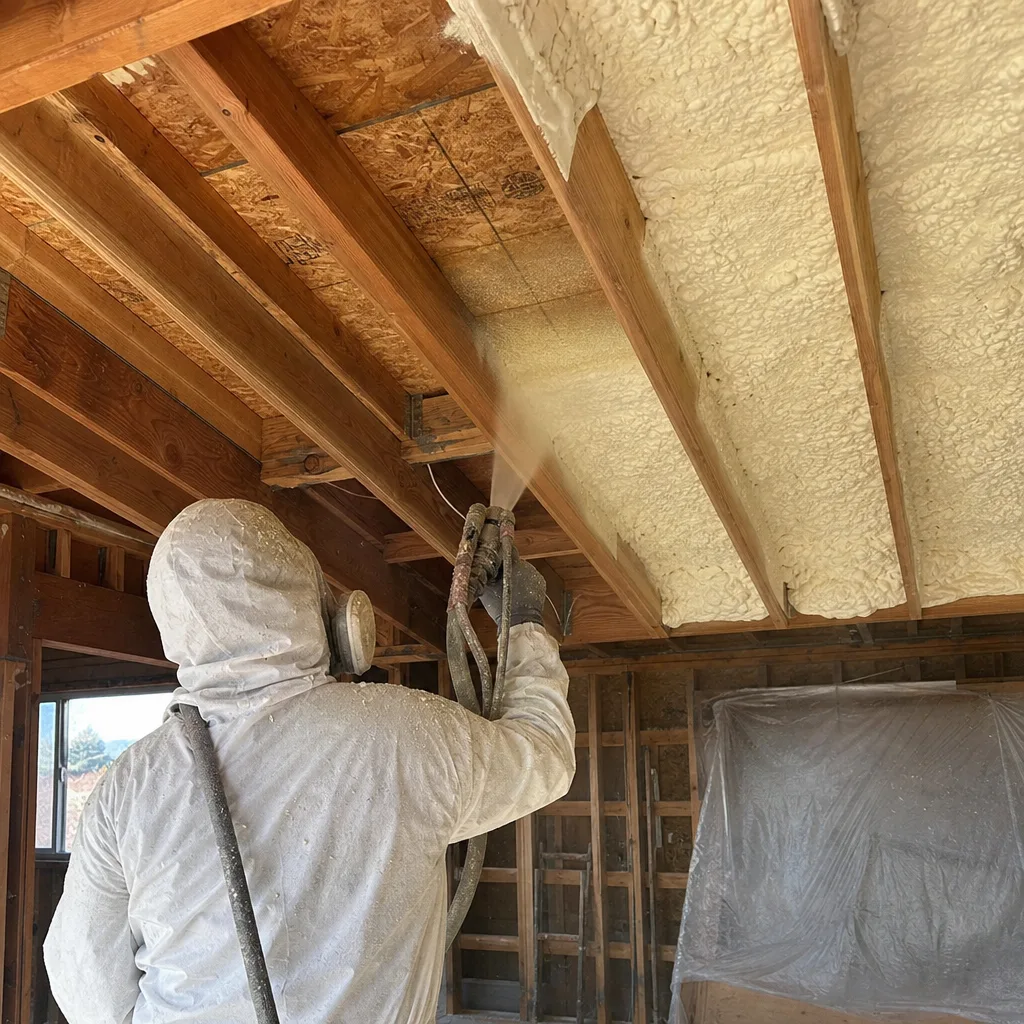
Spray foam insulation serves a different purpose in Highgrove than blown in. Where blown in is about thermal resistance across the attic floor, spray foam is about sealing the envelope: rim joists, knee walls, the underside of the roof deck in some cases, and any chase or penetration that lets superheated attic air flow into the living space. In Highgrove’s slab-on-grade tract homes, air leaks around plumbing stacks and electrical penetrations are common, and foam is the material that actually stops them. We install open-cell and closed-cell systems from the brands we carry. Details are on the Spray Foam Insulation in Highgrove page.
What happens when you call
- 1
A real person answersNo phone trees — you reach a local pro.
- 2
You get an upfront price rangeHonest numbers before anyone is dispatched.
- 3
A background-checked tech heads outLicensed & insured, dispatched right away.
- 4
You approve before work beginsNothing starts until you say go.
Blown In Insulation in Highgrove
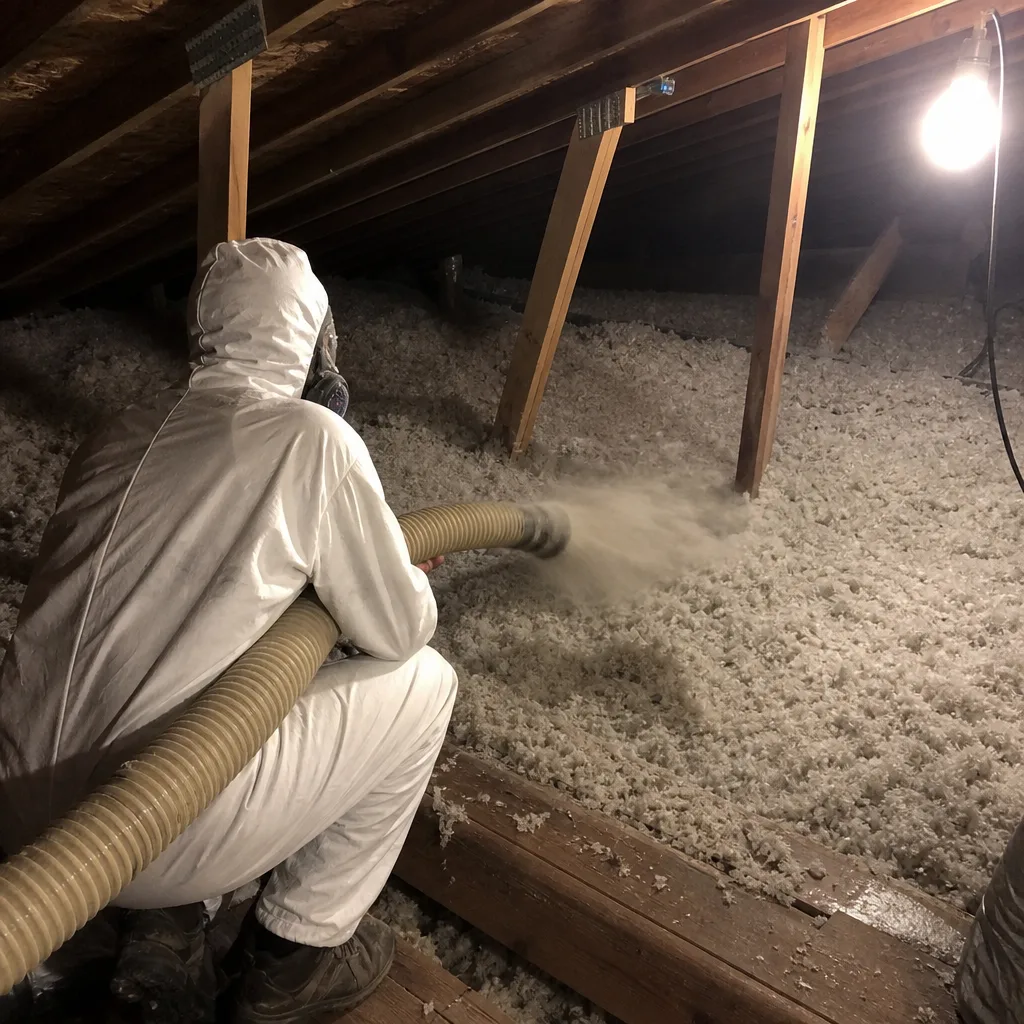
Blown in insulation in Highgrove is, more often than not, the right answer for attics in this city’s 1950s-to-1970s housing stock. These homes were built when insulation was an afterthought, and most now have a thin layer of original batt that’s settled to R-11 or worse. In a climate where attic temperatures regularly exceed 130°F, that’s nowhere near enough to stop heat from flooding into the house. Blown in material – whether cellulose or fiberglass – fills the entire attic floor evenly, including the narrow eaves around the low-pitch roofline that batts can’t reach. It’s the practical, cost-effective way to bring a Highgrove attic up to a level that actually changes how the house feels in August. For a broader look at this service, see Blown In Insulation.
Cellulose Insulation
Signs you need it
You can see gaps or bare spots in your attic, or the existing insulation is so thin you can spot the ceiling joists from the access hatch.
What it costs in Highgrove
Expect $0.90 to $1.80 per square foot of installed loose-fill cellulose in a Highgrove attic, depending on depth and prep work.
How we do it
We clear debris from the attic floor, seal or shield any heat-producing fixtures, and then blow the cellulose to a consistent depth that meets the target R-value for Highgrove’s climate.
Blown In Attic Insulation
Signs you need it
Rooms near the ceiling feel noticeably warmer than the rest of the house, or your AC runs longer than it did five years ago without keeping up.
What it costs in Highgrove
Blown in attic insulation in Highgrove typically lands between $1,200 and $2,800 for an average single-story tract home, depending on attic square footage and the depth needed.
How we do it
We inspect the attic to confirm joist spacing and vent condition, clear any existing debris that would compromise the new layer, then blow material to an even depth across the full attic floor.
Blown In Cellulose Insulation
Signs you need it
You want insulation with higher recycled content, or your attic has irregular joist bays and obstructions that make batt installation leave large gaps.
What it costs in Highgrove
Blown in cellulose in a Highgrove attic runs from $1.00 to $1.80 per square foot installed, with the final number driven by depth, prep, and access conditions.
How we do it
We prep the attic by clearing old dust and debris (a standard step after Highgrove’s Santa Ana season), protect soffit vents to maintain airflow, and blow cellulose to the specified depth.
Loose Fill Insulation
Signs you need it
Your attic has settled or uneven insulation, leaving some areas covered and others nearly bare, which is common in Highgrove after years of heat cycling.
What it costs in Highgrove
Loose fill insulation in Highgrove ranges from $0.90 to $1.65 per square foot installed, with prep and cleanup work influencing the final figure.
How we do it
We level and distribute loose fill material across the attic floor using calibrated blowing equipment, adjusting the depth until we reach the target thermal resistance for the space.
What Blown In Insulation Costs in Highgrove
| Item | Typical range in Highgrove |
|---|---|
| Blown in attic insulation (average home) | $1,200 – $2,800 |
| Blown in cellulose, per sq ft | $1.00 – $1.80 |
| Loose fill insulation, per sq ft | $0.90 – $1.65 |
How long does blown in insulation last in Highgrove?
Cellulose and fiberglass loose fill both hold their R-value for decades, but Highgrove’s heat and Santa Ana dust can accelerate settling in the first two years. A recheck every ten to fifteen years is smart. Call (866) 950-6425 for an attic assessment.
Is blown in insulation better than batt for Highgrove homes?
For most Highgrove attics from the mid-century era, yes. Blown in fills the uneven spaces and low eaves of these low-slope roofs far more completely than batts can, which means fewer heat leaks in summer. Call us for a material-matched recommendation.
Brands We Service in Highgrove
We install and service insulation from CertainTeed, GreenFiber, and Icynene in Highgrove attics and walls. Parts and material for these systems are stocked in our local supply chain, which keeps typical turnaround tight for Highgrove jobs. See our brands for the full range we carry.
Pricing for Insulation Company in Highgrove, CA
| Service | Typical range in Highgrove |
|---|---|
| Attic insulation package (average home) | $1,500 – $3,500 |
| Blown in attic insulation | $1,200 – $2,800 |
| Blown in cellulose, per sq ft | $1.00 – $1.80 |
| Loose fill insulation, per sq ft | $0.90 – $1.65 |
| Attic air sealing | $400 – $1,200 |
| Radiant barrier installation | $800 – $2,200 |
| Spray foam insulation, per sq ft (open-cell) | $0.75 – $1.60 |
| Spray foam insulation, per sq ft (closed-cell) | $1.25 – $2.50 |
| Spray foam rim joist sealing | $600 – $1,800 |
| Mineral wool batt installation, per sq ft | $1.50 – $2.80 |
Prices in Highgrove push upward when attics have significant Santa Ana dust buildup that requires extra prep time, or when low-slope roof geometry makes access tighter than a standard walk-up attic. You’ll get an upfront price before any work starts, so the number we quote is the number you pay.
Neighborhoods We Serve in Highgrove
We work across the 92313 ZIP code and the surrounding Highgrove area, and most of our calls come from the classic mid-century tract pockets that define this part of the Inland Empire. Our response for Highgrove jobs is typically within one to two business days for estimates, depending on current scheduling.
- Highgrove core (92313)
- Center Street corridor
- Residential streets east of the 215
- Low-slope tract blocks near Main Street
- Newer infill and perimeter developments
Service Area – Cities Near Highgrove
Beyond Highgrove proper, we regularly work in neighboring communities across the Inland Empire. Homeowners in Grand Terrace, CA deal with similar slab-on-grade tract homes and summer heat. Colton, CA has a mix of older and newer construction that changes the insulation approach. Loma Linda, CA brings its own housing stock into the picture. And Rubidoux, CA sits close enough that the climate and attic conditions overlap with Highgrove’s.
Serving Highgrove, CA — Our Local Coverage Area
We’re based in the Highgrove area and know this community well. Use the map below to see our service coverage — if you’re nearby, we can almost certainly help.
FAQs About Insulation Company in Highgrove
Most Highgrove estimates are scheduled within one to two business days, and we set a specific arrival window so you’re not waiting around. Call (866) 950-6425 and we’ll find the next open slot that works for your schedule.
Most attic insulation and air sealing jobs in Highgrove do not require a permit, since they’re classified as minor weatherization work. If your project involves structural changes or new venting, we’ll let you know what’s required before we start.
We cover all of Highgrove’s 92313 ZIP code plus Grand Terrace, Colton, Loma Linda, Rubidoux, and the surrounding Inland Empire communities. If you’re just outside Highgrove, call (866) 950-6425 and we’ll confirm coverage for your street.
What happens when you call
- 1A real person answersNo phone trees — talk to a local insulation pro.
- 2You get an upfront price rangeHonest numbers before anyone is dispatched. No surprises.
- 3A background-checked tech heads outLicensed & insured, typically within 1-hour.
- 4You approve before work beginsNothing starts until you say go.
What Highgrove Customers Say
"Spray foam in the rim joists in the basement. The cold floors above them are gone."
— Angela Tran"Attic was at maybe R-11 from the 1970s and blown in over the top would have just buried the problem. They removed the old material, air sealed the top plates and penetrations first, then blew in to R-49. The upstairs is a completely different house in August."
— Jason Norris"Work is good and the house is noticeably more comfortable. There was insulation debris left in the hall closet under the attic access that I had to clean up."
— Miguel Salazar